Background
History of the Wiehre
From the village of Adelhausen to incorporation in 1826 - over 1,000 years of neighborhood history.
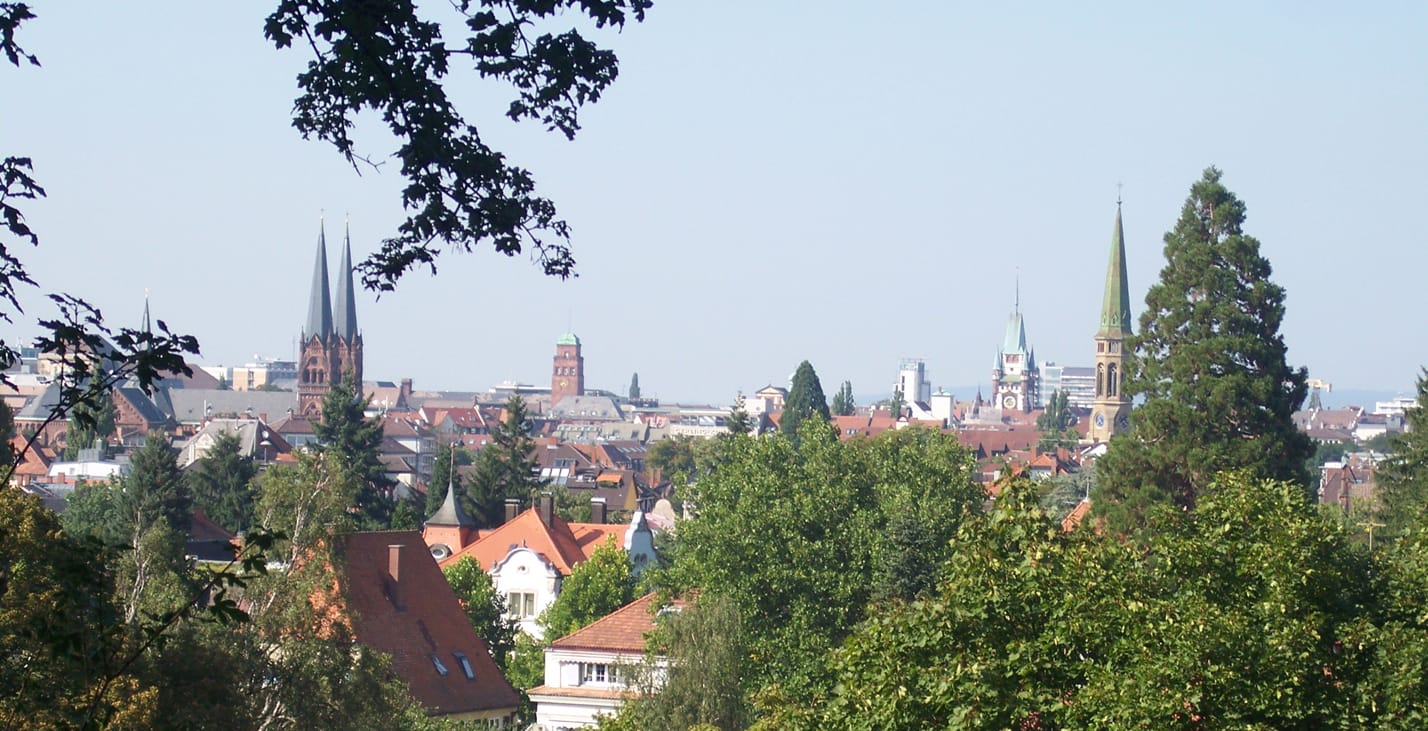
The Wiehre is among the oldest documented settlement areas of Freiburg. The name appears as early as 1008 in a deed of King Henry II as a field name, alongside the village of Adelhausen, whose parish church was older than Freiburg's own city churches. Because of its exposed position outside the city walls, Adelhausen was plundered during every siege of Freiburg; in the 17th century the French fortress engineer Vauban had the remaining houses torn down to expand the fortifications. In 1643 the scattered settlements were merged into the municipality of Wiehre, and on 25 February 1826 it was incorporated into Freiburg.
Today's character was shaped by the Wilhelmine era between 1850 and 1914. Under Mayor Otto Winterer - who on taking office in 1888 still led a mid-sized town - entire streets of villas, town houses and grand apartment buildings arose within a single generation; by his retirement in 1913 he was regarded as the city's "second founder." The opening of the Höllental railway in 1887, with the original Wiehre station on Urachstraße, connected the quarter to the Black Forest and accelerated its growth.
Traces of earlier eras came to light in 2020/21 during construction work on Kronenstraße: archaeologists uncovered nearly 400 skeletons from the medieval leprosy cemetery belonging to the "Gutleuthaus," first mentioned in 1251. The Baden Revolution is remembered at the Old Wiehre Cemetery, where in 1849 the insurgents Maximilian Dortu, Friedrich Neff and Gebhard Kromer were shot by Prussian soldiers.